
The artificial intelligence boom is rewriting demand patterns across every industrial sector — and few will see as dramatic a transformation as water treatment. The hyperscale data centers powering ChatGPT, Gemini, Claude, and the next generation of AI infrastructure consume staggering volumes of cooling water, and the engineering economics of that cooling depend critically on high-performance reverse osmosis membranes.
For water purification brands and OEM/ODM partners with the right product positioning, the AI data center cooling water market represents the most significant new B2B opportunity in the industry since the rise of residential RO in the 1990s. Here’s how to understand it — and how to position your brand to capture it.
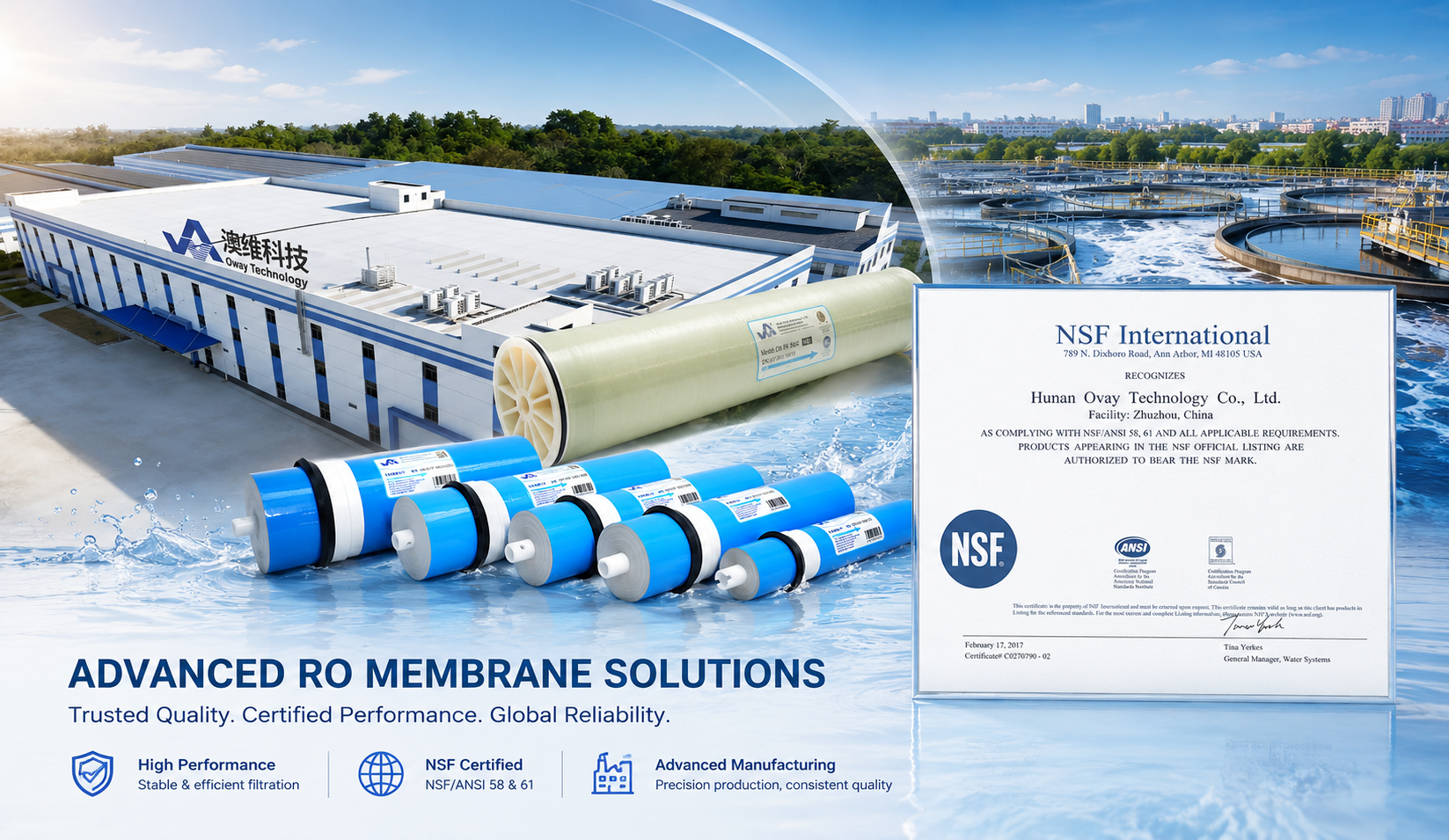
The Scale of AI Data Center Water Demand
Recent disclosures from the major US hyperscalers reveal water consumption figures that surprised even industry analysts:
- Microsoft consumed approximately 1.7 billion gallons of water in 2022, up 34% year-over-year, largely attributed to AI workloads
- Google disclosed 5.6 billion gallons of water consumption in 2022, with data centers representing the largest share
- Meta’s AI infrastructure expansion is projected to drive a 31% increase in data center water consumption by 2030
- The University of California Riverside estimated that training a single large language model can consume up to 700,000 liters of fresh water
Looking ahead, industry analysts project US data center water consumption will grow from approximately 1.7 trillion gallons in 2023 to over 4 trillion gallons by 2030 — a 135% increase driven primarily by AI workloads.
Why RO Membranes Are Critical for AI Cooling
Data center cooling systems require water that meets specific quality standards to prevent scaling, fouling, and corrosion in heat exchangers and cooling towers. Untreated municipal water — even high-quality US tap water — contains dissolved minerals, chlorides, and silica that quickly degrade cooling system efficiency.
RO membranes serve two critical functions in modern data center cooling:
Function 1: Cooling Tower Makeup Water Treatment
RO pre-treatment reduces total dissolved solids (TDS) in makeup water, allowing cooling towers to operate at higher cycles of concentration. This translates directly to lower water consumption per megawatt of computing — a metric (Water Usage Effectiveness, or WUE) that data center operators increasingly report to investors and regulators.
Function 2: Direct-to-Chip Liquid Cooling Loops
The new generation of GPU-dense AI training clusters (NVIDIA H100, H200, and Blackwell architectures) generate too much heat for traditional air cooling. Direct-to-chip liquid cooling using closed-loop dielectric or treated water systems is becoming the standard. These systems require ultra-low TDS water — typically below 10 ppm — making RO membrane filtration essential.
The Membrane Specifications That Matter
Data center cooling water applications place specific demands on RO membranes that differ from residential or industrial process water:
Required performance characteristics:
| Specification | Target Value | Why It Matters |
|---|---|---|
| Salt rejection rate | 99%+ | Direct-to-chip cooling requires ultra-low TDS |
| Operating pressure | Low (40-100 PSI) | Energy efficiency — every kWh matters in data centers |
| Membrane flux | High (>11 GFD) | Footprint efficiency — data center floor space is premium |
| Fouling resistance | Critical | Reduces maintenance intervals and downtime |
| Continuous service life | 3-5+ years | Aligns with data center maintenance cycles |
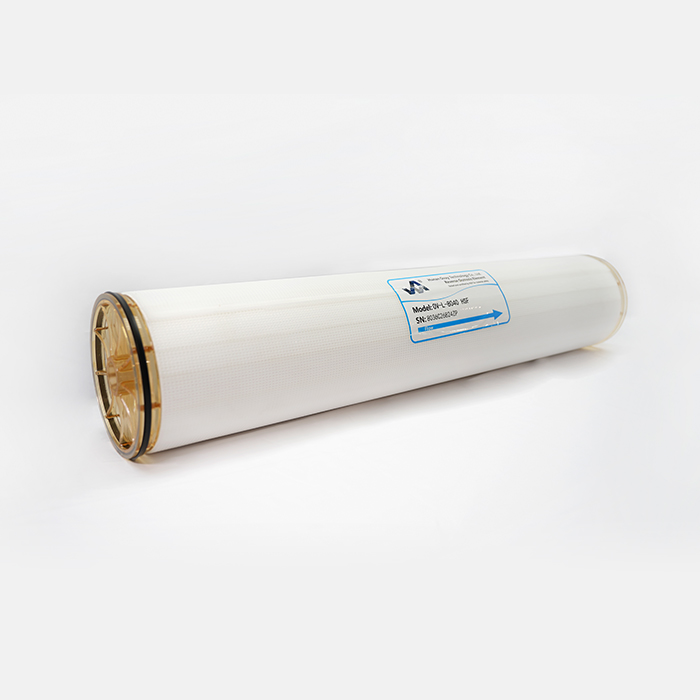
The combination of high flux + low operating pressure + extended fouling resistance is exactly what OVAY’s OV-L series (low-pressure industrial RO membranes) was engineered to deliver.
The OEM Opportunity: Why Now Is the Right Moment
The AI data center water treatment market is currently in an early-mover phase where most large data center operators are still defining their long-term cooling architectures. This creates a specific window of opportunity for OEM brands:
Opportunity 1: Replacement Membrane Aftermarket
Every commissioned data center cooling system needs membrane replacement every 3-5 years. The installation rates of 2023-2024 will drive replacement demand from 2026-2029. Brands that establish relationships with data center facility teams now will be positioned to capture this recurring revenue.
Opportunity 2: Custom-Spec Membranes for Specific Operators
Hyperscalers (Microsoft, Google, Meta, Amazon, Oracle) increasingly want to specify membrane configurations to their specific cooling architectures — flow rates, fouling resistance profiles, certificate of analysis requirements. This is OEM/ODM territory.
Opportunity 3: Channel Partner Programs with Cooling System OEMs
Major liquid cooling system manufacturers (CoolIT, Submer, GRC, Asetek) increasingly bundle RO pre-treatment with their solutions. Becoming an approved membrane supplier to these companies is a high-leverage B2B sales motion.
Opportunity 4: Regional Data Center Hubs
US data center construction is concentrating in specific geographies: Northern Virginia (Loudoun County), Phoenix/Mesa AZ, Atlanta GA, Columbus OH, Reno NV. Building distributor relationships in these specific markets creates outsized exposure to data center demand.
Positioning Your Brand for This Market
Capturing the data center cooling opportunity requires a different go-to-market approach than residential RO. Key adjustments:
Product positioning:
- Lead with technical specifications: salt rejection, flux, operating pressure
- Emphasize fouling resistance and service life — total cost of ownership matters more than upfront price
- Provide detailed engineering datasheets and CFD modeling support
Sales approach:
- Target data center facility engineers and cooling system integrators, not procurement
- Build case studies and reference installations as quickly as possible
- Participate in industry events: Uptime Symposium, DCD, AFCOM Data Center World
Marketing channels:
- Technical content marketing (white papers, application notes)
- LinkedIn outreach to data center engineering communities
- Trade publication advertising: Data Center Dynamics, Mission Critical Magazine
How OVAY’s OV-L Series Fits This Opportunity
OVAY’s OV-L series industrial RO membranes were engineered specifically for high-flux, low-pressure applications including data center cooling, AI infrastructure, and semiconductor pre-treatment. Key characteristics:
- 99%+ salt rejection at standard test conditions
- Engineered surface structure for reduced biofouling (electron microscopy comparison data available)
- Extended service life of 5+ years under proper pre-treatment
- NSF/ANSI 58 material safety certification
- 8040 industrial form factor standard for commercial/industrial RO skids
- Custom GPD ratings available for ODM specifications
For OEM brands targeting the data center water treatment market, the OV-L series provides a technically credible product foundation backed by NSF certification and a manufacturer with over a decade of industrial RO membrane production experience.
Action Steps for Your Brand
If you’re considering launching or expanding into the AI data center cooling water treatment market, here’s a 90-day action plan:
Days 1-30:
- Confirm your target customer segment (hyperscalers, colocation providers, cooling OEMs, regional facility operators)
- Sample OV-L series membranes for in-house technical evaluation
- Develop your product positioning and technical datasheet
Days 31-60:
- Begin outbound to 20-30 target data center facility teams or cooling system OEMs
- Develop case study positioning (even hypothetical engineering scenarios are useful early-stage)
- Identify 2-3 trade events for the next 12 months
Days 61-90:
- Convert initial conversations to pilot or sample programs
- Refine technical positioning based on customer feedback
- Plan your first OEM production order
The Bottom Line
The AI data center cooling water market is not a future opportunity — it’s a current one, and the brands that establish positioning in 2025-2026 will be the dominant players in 2027-2030. The technical requirements favor membrane brands that can offer high-performance industrial RO with comprehensive certification documentation and OEM flexibility.
At Seven Pillars, our OV-L series partnership with OVAY is purpose-built for exactly this opportunity. If your brand is exploring entry into industrial water treatment for AI infrastructure, we can support everything from initial samples to private-label production runs configured for hyperscale cooling specifications.
Ready to explore the AI data center opportunity? Request a technical consultation — we’ll send OV-L series datasheets, comparison data, and a custom OEM proposal for your specific application.