
Launching a private-label RO water purifier brand — whether for Amazon, Costco, regional plumbing distribution, or direct-to-consumer — sits at the intersection of two challenges: building a brand customers trust, and sourcing components that deliver on that trust. The OEM/ODM sourcing path solves the second challenge, but only if you understand how it actually works.
This guide demystifies the private-label RO membrane sourcing process: what’s actually customizable, what realistic MOQs look like, lead times you can plan around, and the real cost structures behind quotes you’ll receive.
What "Private Label" Actually Means for RO Membranes
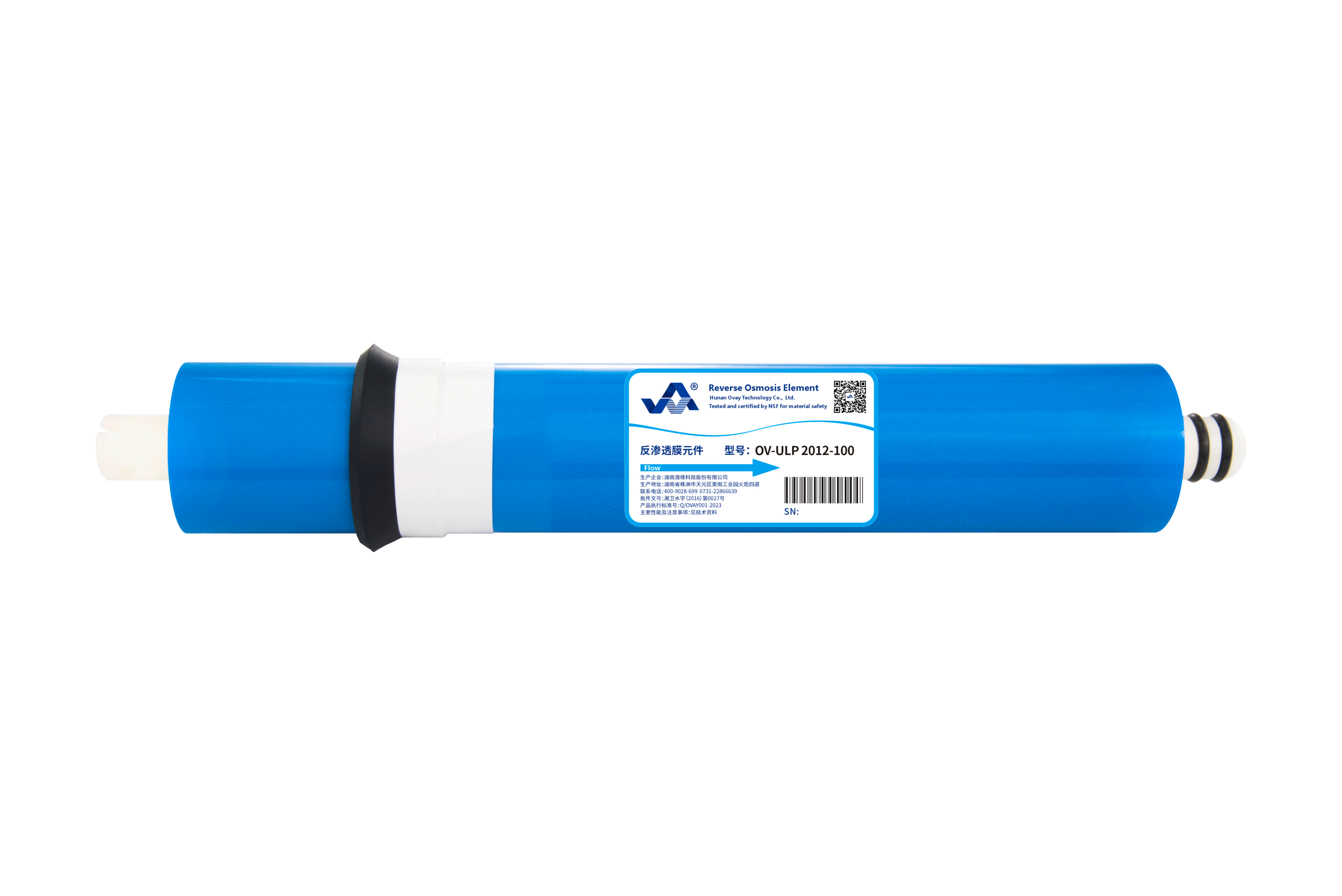
Private labeling RO membranes is more nuanced than putting your brand sticker on someone else’s product. A comprehensive OEM/ODM program covers four levels of customization:
Level 1: Branding & Labeling
- Custom label design on the membrane element wrap
- Your brand name, model designation, country of origin
- QR codes linking to your product page or compliance documents
- Compliance markings (NSF logo where applicable, CE for European markets, etc.)
Level 2: Packaging
- Custom-printed product boxes with your brand identity
- Custom inserts and protective packaging
- Multi-pack configurations matched to your retail channel (single, twin-pack, contractor packs)
- Branded shipping cartons
Level 3: Technical Documentation
- Custom-branded specification sheets
- Custom installation manuals (with your brand name and customer service information)
- Custom warranty cards
- Custom Certificate of Analysis templates
Level 4: Product Configuration (ODM)
- Custom GPD ratings (within manufacturable ranges)
- Custom membrane lengths and diameters for specific system designs
- Custom O-ring colors or end-cap configurations for visual differentiation
- Adjusted salt rejection rates for specific market positioning (premium vs. value tiers)
The difference between OEM (Original Equipment Manufacturing) and ODM (Original Design Manufacturing) matters here: OEM typically means we manufacture an existing product design to your brand; ODM means we customize the design itself for your specifications.
Minimum Order Quantities: What’s Realistic
MOQs in the RO membrane OEM industry vary significantly based on customization level. Here’s a realistic breakdown:
| Customization Level | Typical MOQ | First-Order MOQ (For Testing) |
|---|---|---|
| Standard product, custom label only | 1,000-3,000 units | 500 units |
| Custom label + custom packaging | 3,000-5,000 units | 1,000 units |
| Custom label + packaging + documentation | 5,000-10,000 units | 2,000 units |
| Custom product configuration (ODM) | 10,000-20,000 units | 5,000 units |
| Brand-new product development | 50,000+ units | Negotiated case-by-case |
Important nuance: Some suppliers advertise "low MOQ" (e.g., 100 units) but charge premium per-unit pricing that makes the math unviable for resale. A 500-unit first order at reasonable per-unit pricing is generally more economically rational than 100 units at 3x the price.
Our approach at Seven Pillars: We offer tiered MOQs starting at 500 units for first-time customers running market tests, with significant per-unit pricing improvements at 5,000, 10,000, and 25,000-unit tiers.
Lead Times: Order to US Warehouse
Realistic lead time planning is essential for managing your inventory and your retail relationships. Here’s what to expect for a typical OEM order:
| Phase | Standard Duration | Notes |
|---|---|---|
| Quote & PO finalization | 1-3 business days | Including BOM, sampling, technical review |
| Pre-production sample | 7-14 days | Approved before bulk production starts |
| Mass production | 25-35 days | Subject to MOQ and current capacity |
| QC and packing | 5-7 days | Including CoA documentation |
| Sea freight to US West Coast | 25-35 days | LA / Long Beach ports |
| Sea freight to US East Coast | 35-45 days | NY / Savannah ports |
| Customs clearance & last-mile | 5-10 days | Including duty, broker, trucking |
| Total: Order to US warehouse | 75-110 days | Plan accordingly for retail launches |
Air freight option: For urgent orders or smaller quantities, air freight cuts shipping time to 5-7 days but typically doubles the per-unit logistics cost. Most brands use sea freight for stable inventory and air freight only for stockouts.
Real Cost Components: Understanding Your Quote
A professional OEM quote breaks down costs by category. Here’s what’s actually included in your per-unit pricing:
- Base membrane element manufacturing — the membrane, glue lines, ATD, end caps, brine seal
- Custom labeling & printing — typically $0.05-$0.30 per unit depending on complexity
- Packaging — $0.30-$2.00 per unit depending on materials and printing
- Documentation & certification — typically amortized across the production run
- QC and testing — 100% testing protocols add ~3-5% to base cost
- Tooling & setup (one-time) — for custom packaging and labels, typically $500-$2,500 amortized over your first production run
FOB China prices typically include items 1-5 but exclude:
- Sea freight ($1.50-$4.00 per unit depending on volume)
- US customs duty (typically 0% for RO membranes under HS code 8421.21)
- US port fees and last-mile trucking
- US warehouse receiving and storage
Pro tip: Always compare DDP (Delivered Duty Paid) quotes when evaluating different suppliers — comparing FOB to DDP gives you a misleading apples-to-oranges view of total landed cost.
OEM Process Step-by-Step
Here’s exactly what happens from your first inquiry to your branded product on the shelf:
Step 1: Discovery Call (Week 1)
We learn about your brand, target market, retail channels, volume projections, and customization vision. You receive a preliminary product recommendation (which OVAY series fits your needs) and a rough cost estimate.
Step 2: Sample & Quote Phase (Weeks 2-3)
We send a labeled sample for your testing and approval. You receive a detailed quote with itemized costs, MOQ tiers, and lead times. Your team reviews compliance documentation.
Step 3: Design Approval (Week 4)
Final design files for labels, packaging, and documentation are approved. Tooling costs (if any) are paid. Production slot is secured.
Step 4: Production (Weeks 5-9)
Mass production at OVAY’s NSF-certified facility. You receive weekly progress updates and photos. 100% QC testing per element.
Step 5: Pre-Shipment Inspection (Week 10)
You receive a final QC report and CoA for the production batch. You can arrange third-party inspection (e.g., SGS, BV) if desired.
Step 6: Logistics & Delivery (Weeks 11-16)
Sea freight to your designated US port or warehouse. Documentation handover for customs clearance.
Step 7: Reorder Planning
Your second order typically processes faster (3-4 weeks shorter total lead time) since tooling and approvals carry over.
Common Pitfalls in Private-Label RO Sourcing
Pitfall 1: Underestimating Compliance Documentation
Custom-branded products still need compliance paperwork. Build 1-2 weeks into your timeline for finalizing custom NSF documentation references, MSDS, and CoA templates.
Pitfall 2: Overcommitting on First Orders
Many brands order full MOQ before testing market response. Start at the smallest tier that still gives you viable per-unit pricing, validate market demand, then scale.
Pitfall 3: Skipping the Pre-Production Sample
Approve labels, packaging, and product fit BEFORE mass production starts. Catching a label error on 5,000 units is a much bigger problem than catching it on a single sample.
Pitfall 4: Not Planning for Inventory Buffer
Sea freight delays happen (typhoons, port strikes, customs holds). Maintain 60-90 days of inventory buffer for steady retail sales.
Pitfall 5: Treating OEM Partner as a Transactional Vendor
Your OEM partner has visibility into industry trends, emerging applications, new product developments at the factory level. The brands that build long-term partnerships with their OEM suppliers consistently outperform those who churn through suppliers chasing the lowest quote.
The Bottom Line
Private-labeling RO membranes through an OEM/ODM partnership is one of the most efficient paths to launching or expanding a water purification brand. The barriers to entry are real — MOQs, lead times, compliance complexity — but they’re navigable with a partner who’s transparent about the process.
At Seven Pillars, we’ve built our OEM/ODM program specifically for US water purifier brands and private-label retailers. Our authorized partnership with OVAY (Hunan Ovay Technology) gives you direct access to NSF-certified manufacturing, with flexible MOQs starting at 500 units and end-to-end support from quote to delivery.
Ready to discuss your private-label project? Request a custom OEM quote — we’ll respond within 24 hours with a detailed cost breakdown, MOQ tiers, and projected lead times for your project.