
Sourcing reverse osmosis membranes for your water purification product line is one of the most consequential decisions your brand will make. The wrong supplier can mean compliance failures, supply chain disruptions, and damaged customer trust. The right one becomes a strategic partner that scales with your business for years.
After years of working with American water purifier brands, retailers, and OEM buyers, we’ve identified seven questions that separate professional sourcing decisions from costly mistakes. If your current or prospective supplier can’t answer these clearly — keep looking.
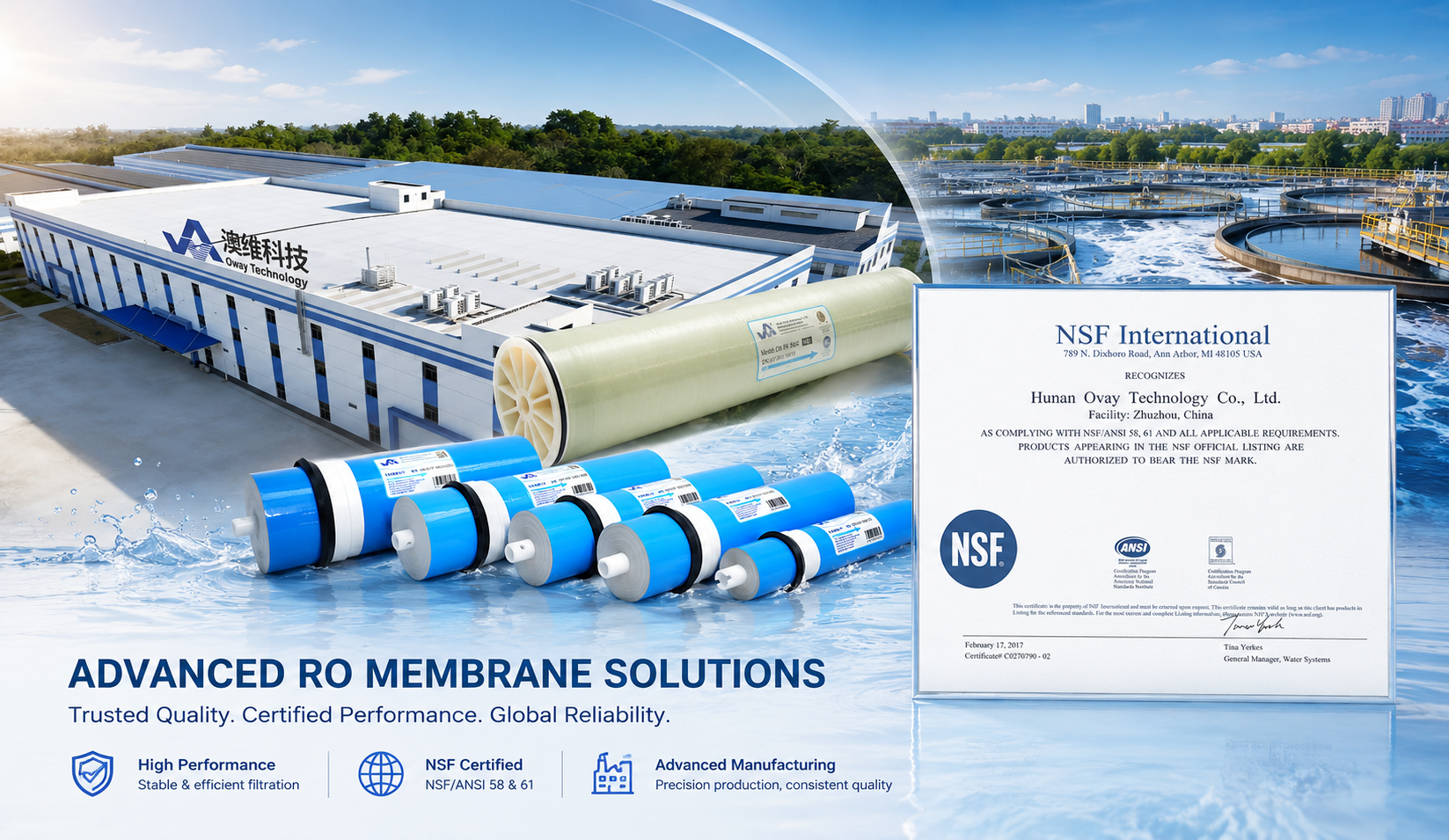
1. Are Your Membranes NSF/ANSI 58 & 61 Certified — And Can You Provide the Documentation?
This is the gatekeeper question. In the US market, any RO membrane that contacts drinking water must be certified to NSF/ANSI Standard 58 (system performance) and NSF/ANSI 61 (material safety). Without this certification, your end product cannot legally be sold as a drinking water filtration device in most states.
What to ask for:
- A copy of the current NSF certification (verify the certificate number at info.nsf.org/Certified/DWTU)
- The exact NSF listing for the membrane model you’re sourcing
- Confirmation that the materials in the production batch match the certified specifications
Red flag: A supplier who says "we use NSF-certified materials" but cannot produce the actual certificate. NSF certification is product-specific, not material-specific.
2. Are You the Manufacturer, an Authorized Distributor, or a Reseller?
There’s a critical difference between these three roles that directly affects your supply chain reliability:
- Manufacturer — produces the membrane element themselves
- Authorized distributor/OEM partner — has a formal agreement with the manufacturer
- Independent reseller — buys from various sources, often without consistent quality control
For OEM customers, an authorized distributor often provides the best balance: factory-direct pricing with the local responsiveness and customization support that direct manufacturers (especially overseas ones) may not offer.
What to ask: "Can I see your distribution agreement or authorization letter?" Legitimate authorized partners will provide this.
3. What’s Your Minimum Order Quantity (MOQ) — And Is It Flexible?
MOQ flexibility tells you a lot about a supplier’s business model:
- High rigid MOQs (10,000+ units) — typically signals a supplier focused on large industrial customers; you may struggle to test new SKUs
- Tiered MOQs — better for growing brands; can start small and scale up
- No MOQ or very low MOQ — often signals a reseller without manufacturing leverage; pricing may be unreliable at scale
What to ask:
- "What’s your MOQ for a first sample order?"
- "What’s your MOQ for ongoing production runs?"
- "How does pricing change at 1K, 5K, 10K, and 50K units?"
A professional OEM partner gives you a clear pricing matrix without hesitation.
4. Can You Handle Custom Branding, Packaging, and Documentation?
For private-label brands, this question determines whether you’re building a real product or just rebadging someone else’s. Comprehensive OEM capability includes:
- ✅ Custom labels on the membrane element itself
- ✅ Custom packaging design and printing
- ✅ Branded technical datasheets and spec sheets
- ✅ Custom user manuals in English (and other required languages)
- ✅ Custom product certification documentation referencing your brand
Red flag: A supplier who only offers "we can put a sticker on it." True OEM capability is end-to-end.
5. What’s Your Typical Lead Time — From Order to Delivery in the US?
Lead time directly affects your inventory planning and your ability to fulfill orders to retailers like Amazon, Costco, or Home Depot. A professional OEM partner gives you a clear breakdown:
- Sampling lead time (typically 7-14 days)
- Production lead time (typically 25-45 days depending on volume)
- Shipping lead time (sea freight: 25-35 days to US West Coast; air freight: 5-7 days)
What to ask: "What’s your typical order-to-arrival lead time for 5,000 units shipped to the US?"
If you get vague answers, that’s a planning risk you’ll inherit.
6. How Do You Handle Quality Control — And What’s Your Defect Rate?
Membrane defects are particularly costly because failures show up after the product is installed in customer homes. Critical QC questions:
- Is each membrane element tested before shipping? (NaCl rejection rate, flow rate, leak test)
- What’s the documented defect rate?
- Can you provide a Certificate of Analysis (CoA) for each production batch?
- What’s the warranty policy and return process?
Best-in-class suppliers test 100% of production output, maintain defect rates below 0.3%, and provide CoA with every shipment.
7. What Happens When Things Go Wrong?
This is the question that separates transactional vendors from true partners. Ask:
- Who is my point of contact if there’s a quality issue?
- How quickly can you replace defective products?
- Do you provide technical support if my end customer reports problems?
- Are you available in my time zone for urgent issues?
A supplier who only responds during Chinese business hours and treats every issue as your problem is not an OEM partner — they’re a transactional vendor. The difference matters most when your brand reputation is on the line.
The Bottom Line
The best OEM RO membrane supplier for your brand isn’t necessarily the cheapest, the largest, or the most well-known. It’s the one who can answer these seven questions clearly, transparently, and with documented evidence.
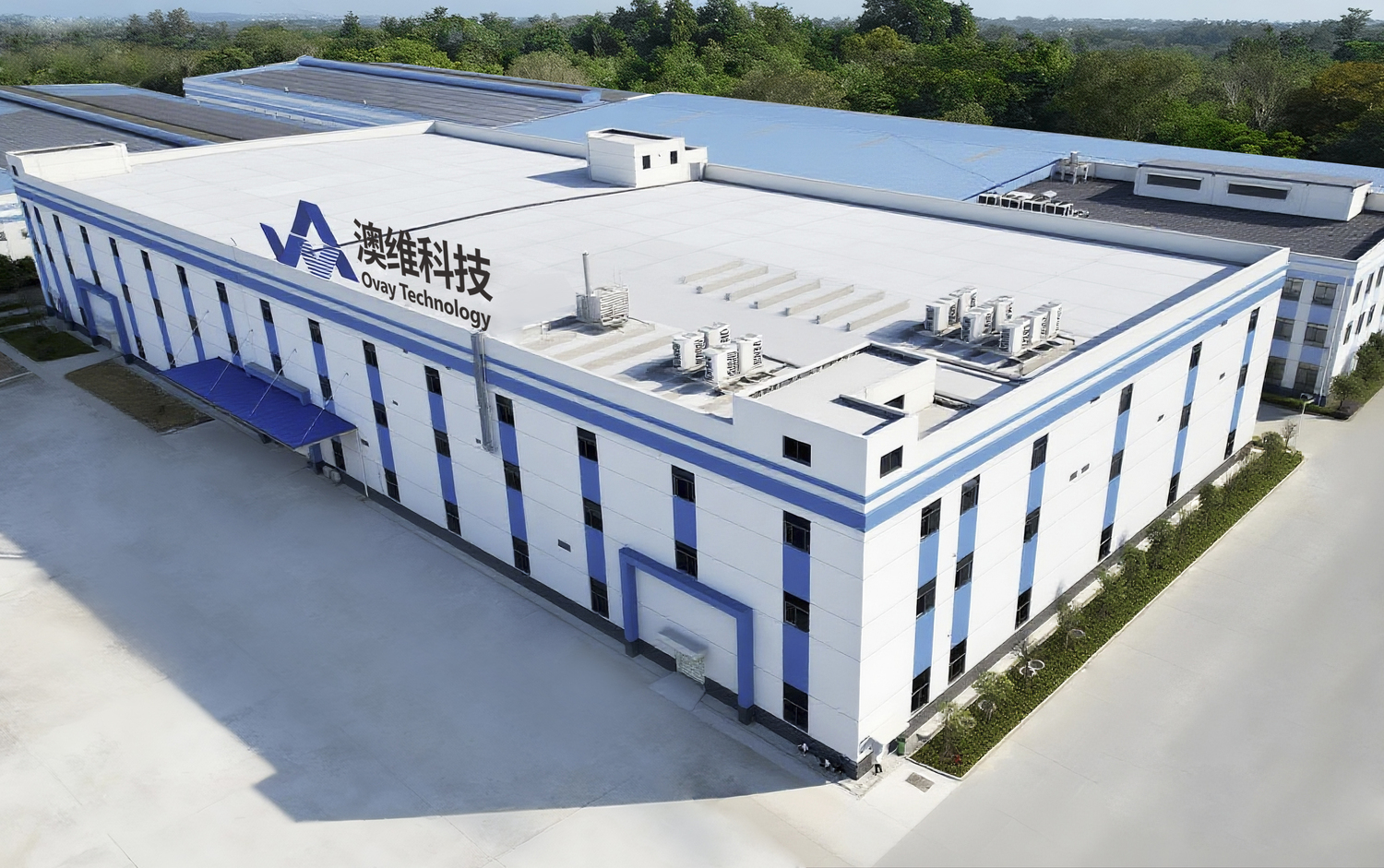
At Seven Pillars, we built our OEM/ODM business around being able to answer "yes" to all seven — backed by our authorized partnership with Hunan Ovay Technology and their 10+ years of NSF certification history.
Ready to evaluate us as your OEM partner? Request a quote — we’ll respond within 24 hours with detailed answers to every question on this list.